
After one year of intensive engineering, manufacturing, installation and commissioning work, Kolar Industrial Solutions successfully started up a large-scale industrial dust extraction system in April. The system was implemented in a mineral wool production facility and is now in trial operation.
This turnkey project represents an important milestone for our team and confirms our ability to deliver complex industrial projects on a large scale — in cooperation with our partner, Rippert GmbH.
The system is technically demanding and designed for a total extraction airflow of up to 100,000 m³/h. The main engineering challenges were related to handling high dust loads, ensuring stable material transport and achieving low emissions into the environment.
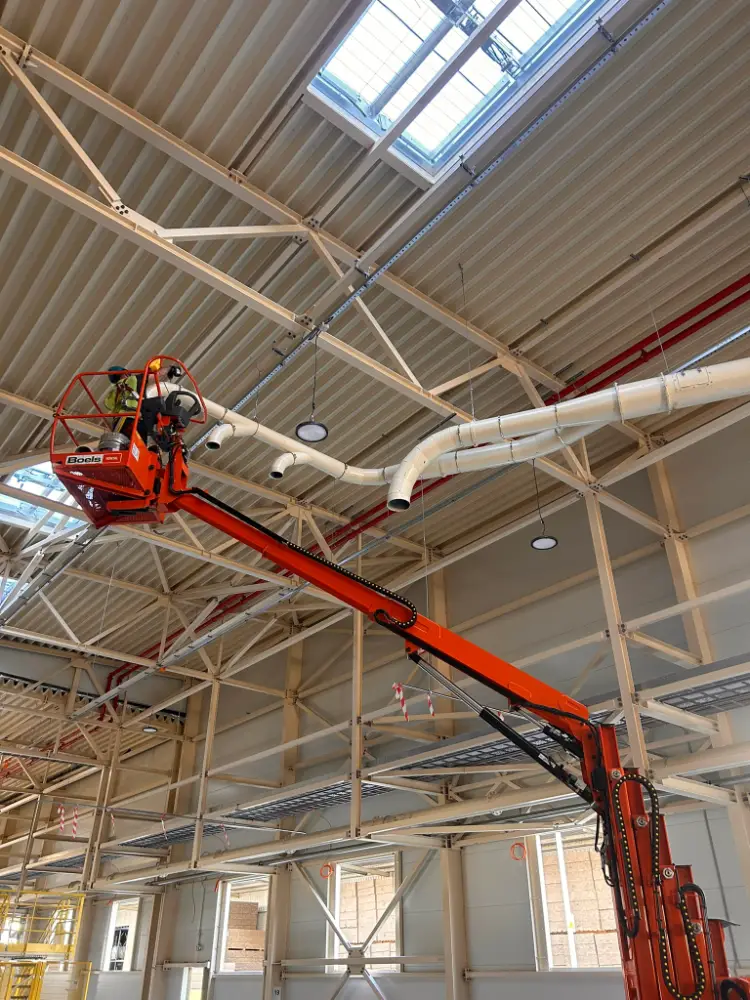
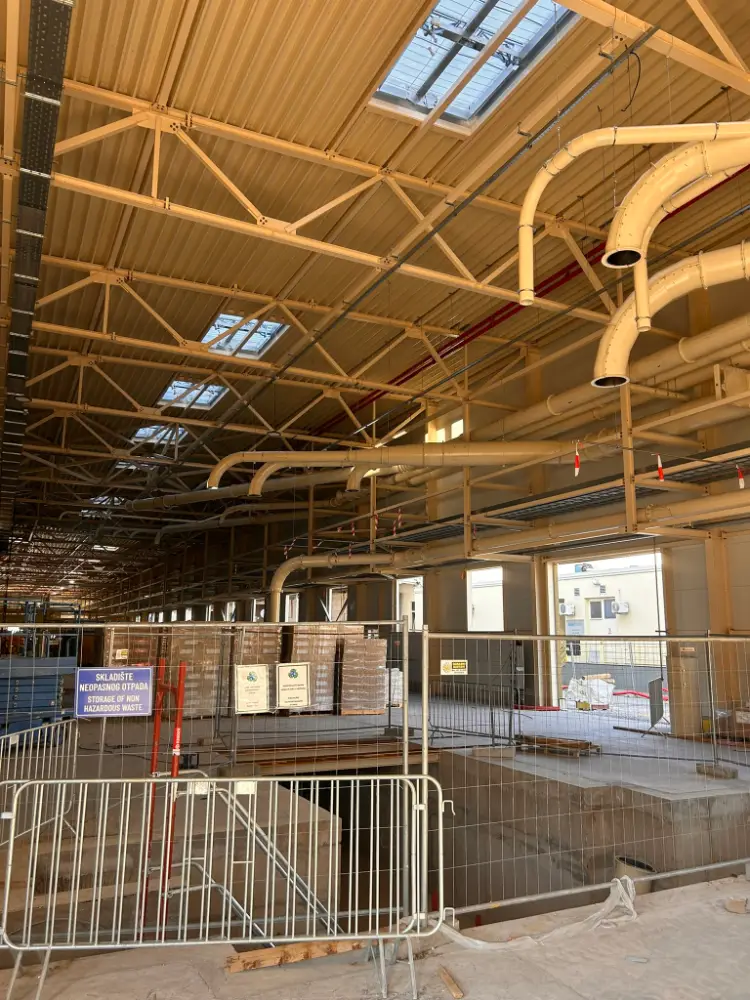
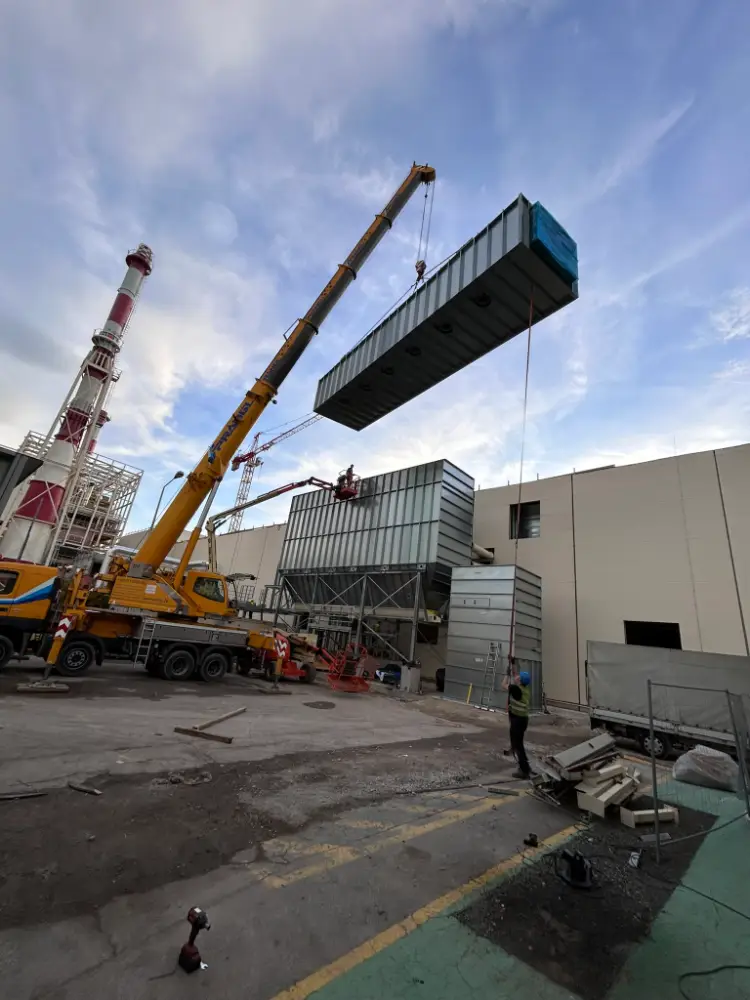
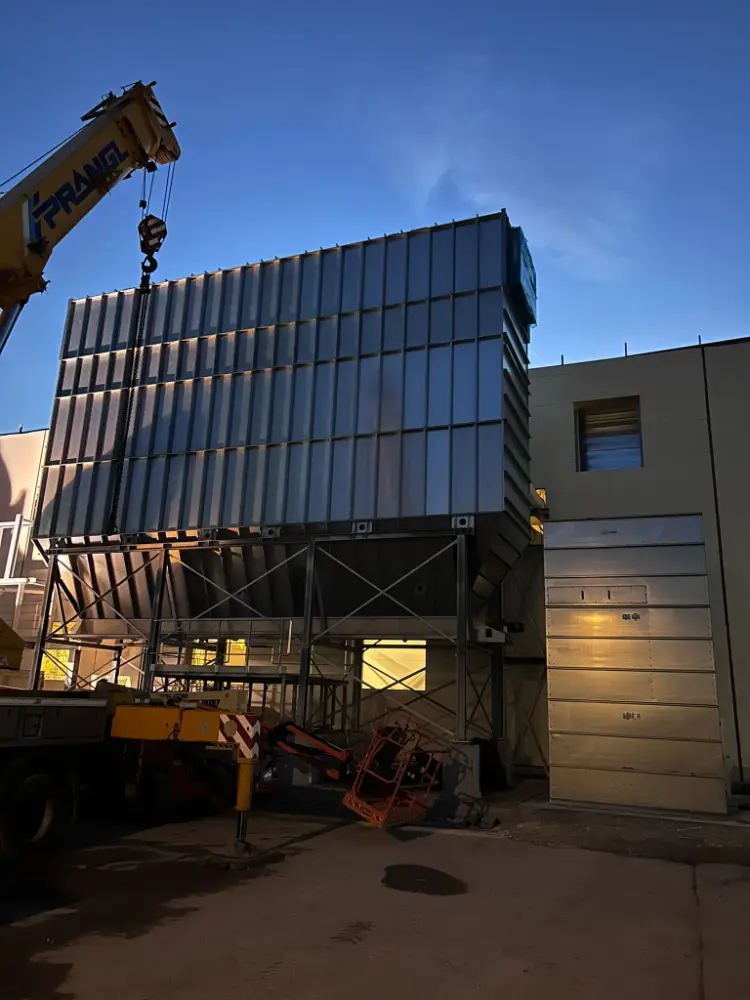
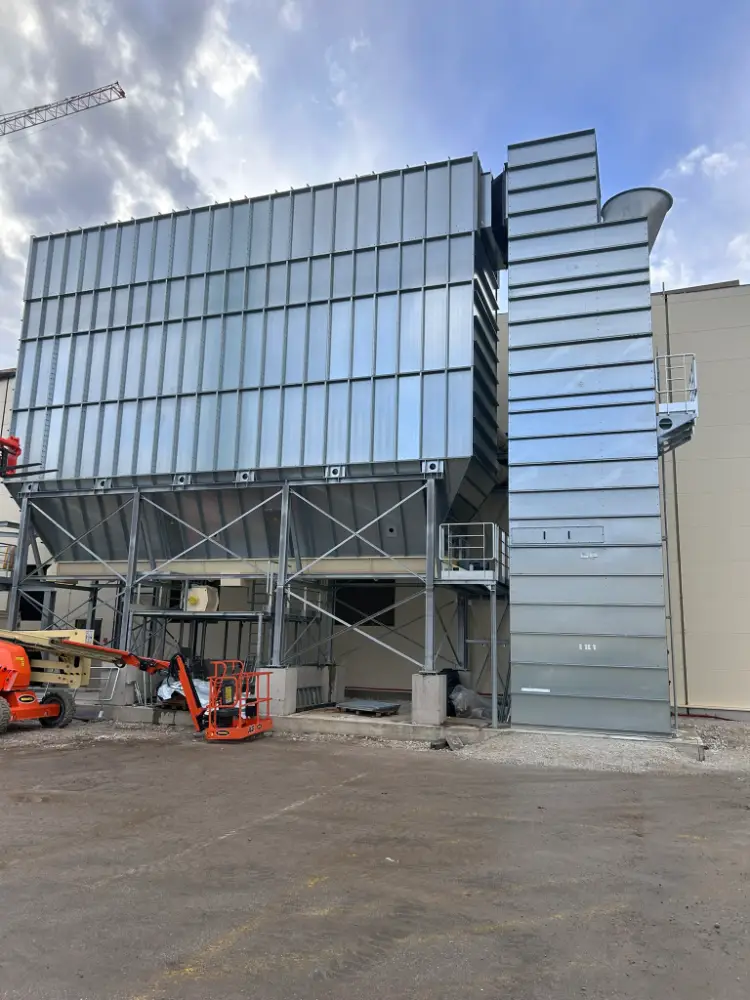
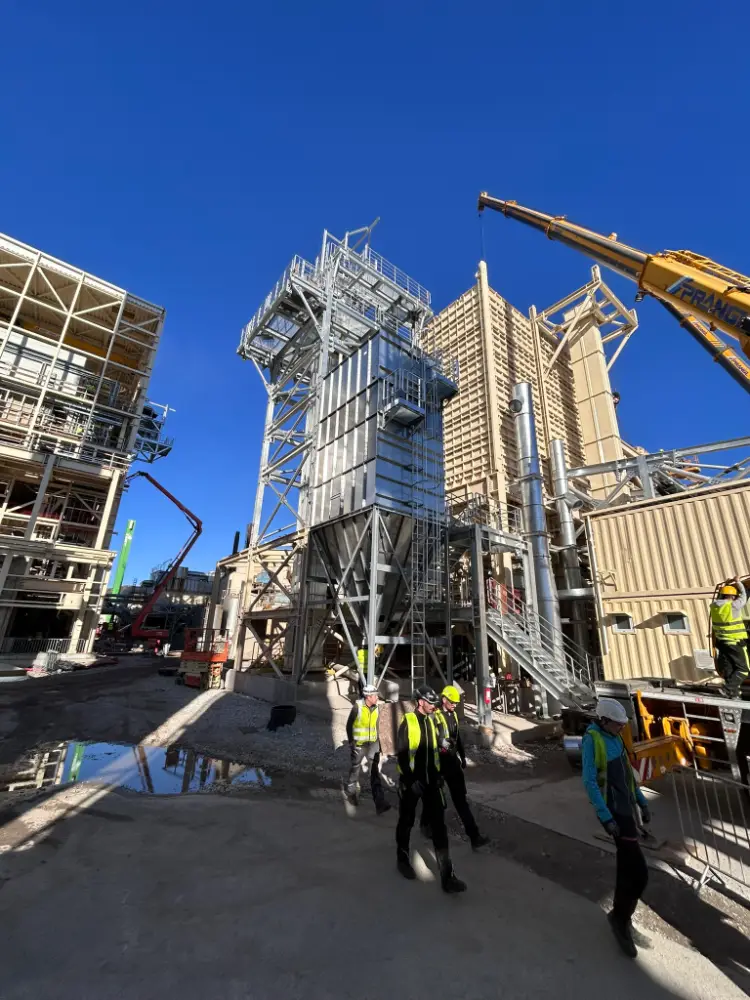
Technical Design of the Dust Extraction System
The project was delivered as a complete turnkey dust extraction system and includes:
- a central pulse-jet bag filter,
- an automated dust discharge system with a rotary valve, screw conveyor and container system,
- a high-performance fan unit controlled by frequency converters,
- an extensive network of extraction ductwork connected to five different machines with multiple extraction points,
- pneumatically controlled dampers for activating extraction on individual duct branches,
- PLC, HMI and SCADA integration for fully automatic operation.
For the supply of key filtration equipment, Kolar Industrial Solutions cooperated with the German company Rippert GmbH, a trusted partner for high-capacity filtration systems and industrial air filtration solutions.
At the heart of the system is a central pulse-jet bag filter, based on proven industrial bag filters technology for demanding industrial environments.
Key Process Parameters of the Dedusting System
The dedusting system was designed for continuous industrial operation under the following process conditions:
- total extraction airflow: up to 100,000 m³/h,
- dust load: 9.5 tonnes per day,
- extraction velocity at capture points: approximately 28 m/s,
- emissions: < 5 mg/m³,
- system negative pressure: up to approximately 5,000 Pa,
- continuous operation: 24/7.
These parameters required precise dimensioning of the entire system, from the extraction points and ductwork to filtration, fan capacity, dust discharge and automation.
Flexible Return Air Concept
One of the key features of this industrial dust collection system is flexible management of filtered air.
The system can operate in two modes:
- Winter mode: filtered air is returned back into the production area, improving energy efficiency and reducing heat losses.
- Summer mode: filtered air is discharged into the environment through the stack.
Switching between the two operating modes is carried out via a damper system, allowing the plant to adapt efficiently to production requirements and seasonal climate conditions.
This return air concept makes the system both technically robust and energy-conscious, while maintaining reliable industrial air filtration performance.
Engineering Challenges in Industrial Filtration Projects
Large-scale dust extraction projects require a comprehensive engineering approach. In this case, several complex aspects had to be addressed:
- dimensioning the system for high-volume airflow within limited spatial conditions,
- coordinating multiple extraction points with different process requirements,
- 3D design and preparation of technical documentation,
- optimisation of pressure losses and energy consumption,
- ensuring reliable dust transport without material build-up,
- integration of the filtration system and ductwork into the existing production process and control system.
Special attention was given to the robustness of the system and stable operation in a continuous industrial process.
The project also demonstrates how properly engineered dust collection systems must combine mechanical design, filtration technology, air handling, material transport and automation into one integrated solution.
Current Status and Expected Results
The system is currently in trial operation. During this phase, key operating parameters are being optimised, including:
- automatic fan control based on damper positions,
- pressure settings in the filter,
- airflow balancing across individual duct branches.
The target results are:
- stable operation with high system availability of more than 99%,
- low emissions and compliance with environmental requirements,
- no material accumulation at extraction points or along the entire ductwork route.
The trial operation phase is an essential step in confirming the long-term stability and performance of the industrial dust extraction system under real production conditions.
Conclusion
This project is a strong example of a large-scale industrial extraction and filtration installation, where success depends on several key factors:
- correct system dimensioning,
- integration of filtration, dust transport and automation,
- operational flexibility,
- reliability in 24/7 production.
Projects of this scale confirm the focus of Kolar Industrial Solutions on complex industrial solutions, where precision, flexibility and engineering knowledge are essential for fast, reliable and technically sound implementation.
With this project, Kolar Industrial Solutions continues to position itself as a serious and reliable partner for demanding industrial filtration, dedusting system and industrial dust collection system projects.